A Brief History of Crypto in Darknet Commerce
The intersection of cryptocurrency and anonymous online markets began in 2011 when Silk Road launched on the Tor network and adopted Bitcoin as its exclusive payment method. Bitcoin offered a radical improvement over traditional payment systems: no bank intermediaries, no identity requirements, and borderless transfers. For the first time, anonymous commercial transactions at scale became technically possible.
The FBI's seizure of Silk Road in 2013 and the subsequent criminal conviction of its founder marked the beginning of an ongoing cat-and-mouse dynamic between law enforcement and cryptocurrency-based anonymous commerce. Critically, blockchain analysis firms like Chainalysis began developing tools to trace Bitcoin transactions — exploiting Bitcoin's fundamental design, where every transaction is permanently visible on a public ledger.
This transparent ledger problem drove the development of privacy-focused cryptocurrencies. Monero (XMR), launched in 2014, became the leading privacy coin by implementing privacy at the protocol level — not as an optional feature, but as a mandatory default for all transactions. Zcash (ZEC) and Dash followed with their own approaches, though Monero remains the most widely adopted in privacy-sensitive contexts.
What Are Privacy Coins?
Privacy coins are cryptocurrencies specifically designed to make transaction metadata — including sender identity, receiver identity, and transaction amount — computationally infeasible to determine from the public blockchain. They achieve this through various cryptographic techniques:
- Ring Signatures — Used by Monero; the actual signer is hidden among a group of plausible signers
- Stealth Addresses — One-time addresses generated for each transaction, preventing address-linking
- RingCT (Confidential Transactions) — Hides transaction amounts while still allowing validity verification
- Zero-Knowledge Proofs — Used by Zcash; proves transaction validity without revealing any details
- Bulletproofs — Compact range proofs used by Monero to minimize transaction size without sacrificing privacy
Accepted Currencies on the Platform
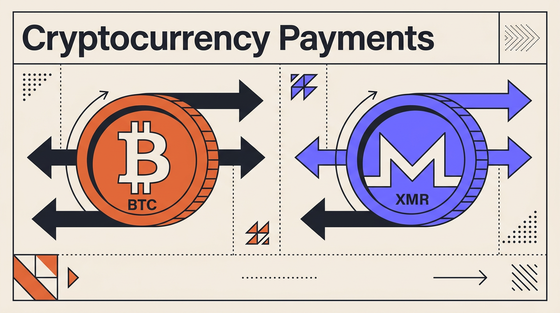
The marketplace accepts two cryptocurrencies: Monero (XMR) and Bitcoin (BTC). Each has distinct characteristics relevant to user privacy and security.
Monero (XMR) — Recommended
Monero implements privacy at the protocol level — every transaction is private by default, regardless of user choices. This means that even a user who makes no effort to obscure their transactions benefits from the same level of privacy as the most sophisticated user. The Monero blockchain reveals no information about transaction amounts, senders, or receivers to outside observers.
For marketplace use, XMR is strongly recommended by most security researchers and community members. Blockchain surveillance firms have publicly stated that Monero transactions are significantly harder (many say practically infeasible) to trace compared to Bitcoin.
Bitcoin (BTC) — Use with Caution
Bitcoin's blockchain is entirely public. Every transaction — the sending address, receiving address, and exact amount — is permanently visible to anyone. While Bitcoin addresses are pseudonymous (not directly linked to real identities), sophisticated chain analysis can often link addresses to individuals through exchange KYC data, IP logging, or transaction pattern analysis.
Bitcoin can be used for marketplace payments, but additional privacy measures are required: coin mixing (CoinJoin), submarine swaps to privacy chains, or conversion to XMR before depositing. See our Bitcoin privacy guide for detailed instructions.